Teaching, mentoring, and tutoring have been central to my work as an educator for more than a decade. I have worked with students in university classrooms, seminars, mentorship programs, and individual tutoring sessions, and I value the different kinds of learning that each setting makes possible.
Across these settings, I am especially interested in helping students make connections: between ideas and historical periods, between disciplines, and between what they encounter in a classroom and the larger questions they have about the world.
My Approach to Teaching
I think learning becomes most interesting when students begin to see connections that were not obvious at first.
In the humanities, that might mean asking what an ancient Egyptian creation story tells us about how people understood the structure of reality, and then considering how a Greek philosopher approaches some of the same fundamental questions differently. In music, it might mean listening to a performance not simply as a realization of a musical score, but as an event shaped by gesture, space, technology, performers, audiences, and cultural expectations.
These kinds of connections are central to my teaching. Rather than treating history, philosophy, religion, literature, art, and music as isolated subjects, I encourage students to ask how different forms of human thought and expression illuminate one another.
I also place considerable emphasis on conceptual understanding. Learning a term or identifying a historical fact is useful, but I am more interested in what students can do with that knowledge. What does it mean to call something a ritual? How is myth different from philosophy—and where do they overlap? What makes an argument persuasive? How does musical expectation shape what a listener experiences?
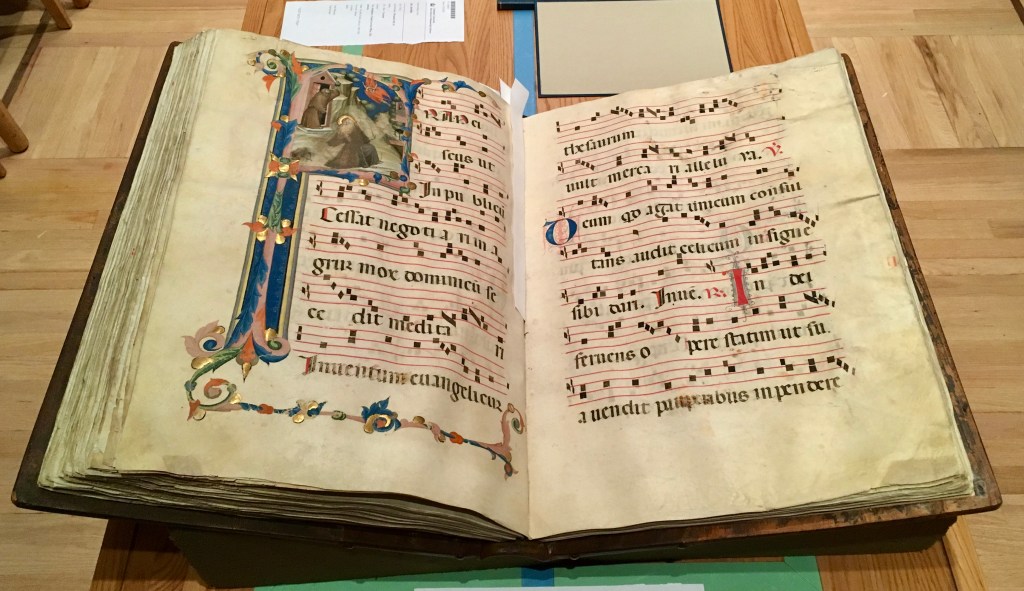
Primary sources are often where these questions become most vivid. A philosophical dialogue, religious text, musical performance, work of art, archaeological object, or historical document gives students something concrete to observe before we begin interpreting it together.
My goal is not simply to provide students with answers. It is to help them become more attentive observers, more careful thinkers, and more confident participants in intellectual conversations.
University Teaching
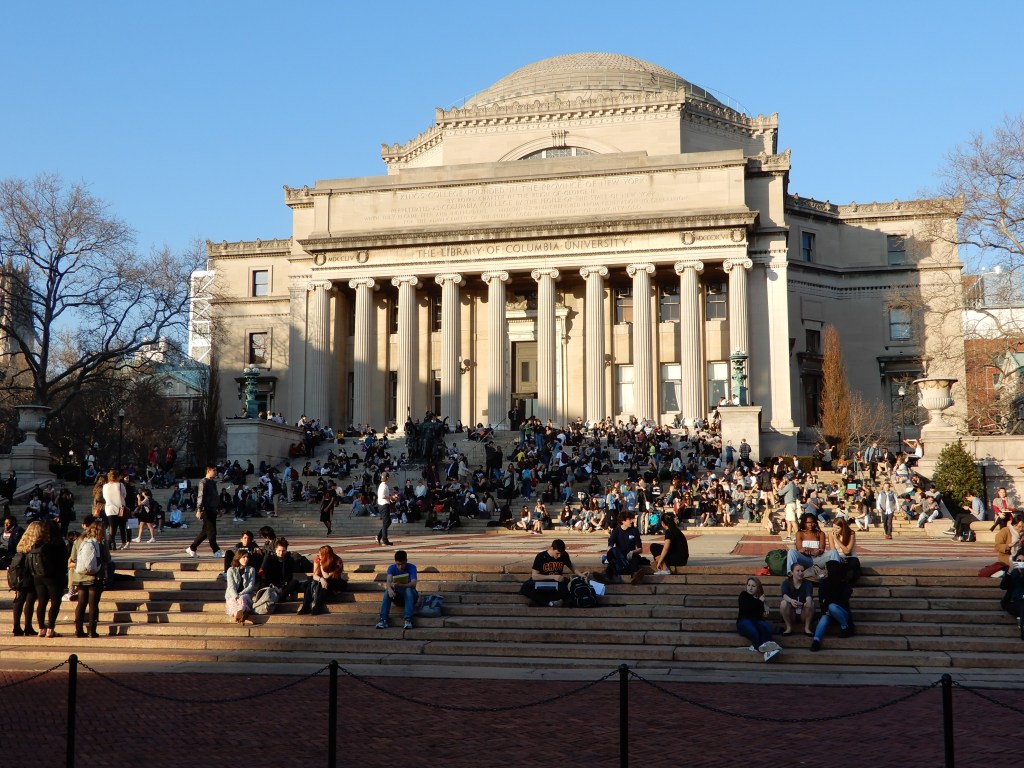
My university teaching has ranged across music and the humanities, from Columbia University’s Core Curriculum to courses in music history and, currently, interdisciplinary humanities at Palm Beach Atlantic University.
I especially enjoy teaching courses organized around large historical and cultural questions. In a humanities classroom, a discussion of prehistory might begin with the paintings at Chauvet Cave and lead to questions about symbolic thought, ritual, human cognition, and the origins of art. A unit on the ancient Near East might bring the Epic of Gilgamesh into conversation with questions about kingship, friendship, mortality, and the relationship between human beings and the divine. Ancient Greece creates opportunities to place Homer, Greek religion, tragedy, and philosophy alongside one another rather than presenting them as unrelated achievements.
Music offers another way of exploring these connections. My background in historical musicology and music cognition has made me particularly interested in the relationship among musical works, performers, listeners, and cultural contexts. A Beethoven overture, a Wagner opera, a religious chant, or a contemporary performance can become an opportunity to ask not only what does this music mean? but how is that meaning created, performed, perceived, and experienced?
Discussion is an important part of this work. I want students to encounter significant ideas and works closely enough that they can begin asking their own questions about them—and recognize that thoughtful interpretation often begins with curiosity rather than certainty.
Mentoring
Mentoring allows for a different kind of educational relationship: instead of beginning primarily with a course curriculum, we can begin with the interests of an individual student.
Since 2022, I have mentored approximately two high-school students each year through the Collegiate Mentorship Program. Students come to the program with an area of curiosity, and over the course of our work together we develop that interest into a more focused intellectual question and research project. Most of these projects have subsequently resulted in publication in junior research journals.
What I value most about the process, however, is what happens before the finished project. Mentoring provides an opportunity for a student to discover that an initial interest can open onto a much larger intellectual landscape.
A student interested in late-Romantic German music, for example, might begin with Wagner, Bruckner, or Mahler. From there, our conversations can expand into questions about religion, ritual, performance, nationalism, aesthetics, or the ways listeners construct meaning from music. We might compare a scene from Wagner’s Parsifal with religious musical practices from other traditions, asking what changes when music is approached simultaneously through musicology, religious studies, anthropology, and performance studies.
I see my role in mentoring as partly that of a guide and partly that of an intellectual conversation partner: suggesting materials and methods, helping students formulate increasingly precise questions, introducing them to unfamiliar disciplines, and giving them room to discover where their own curiosity leads.
Tutoring
My work with high-school students also includes individual and small-group tutoring, particularly in SAT preparation and the humanities.
I enjoy this setting because individual instruction makes it possible to slow down and examine how a student is thinking. A missed SAT question, for example, is not simply something to correct. It can reveal a misunderstanding about proportional reasoning, inference, evidence, sentence structure, or the relationship between an explicit statement and an implicit conclusion.
For that reason, my tutoring emphasizes understanding the reasoning behind a problem rather than memorizing a collection of tricks. In SAT Reading and Writing, we might distinguish between what a passage explicitly states and what a reader can reasonably infer from it. In mathematics, we might take a familiar problem and ask why a particular relationship or procedure works before applying it to a new situation.
The individual setting also allows instruction to respond to the student’s particular strengths, questions, and pace. My aim is ultimately for students to become less dependent on the tutor: to recognize patterns, diagnose their own mistakes, and develop strategies they understand well enough to use independently.
The same principle guides my humanities tutoring. Whether we are discussing a historical text, philosophical argument, literary work, or piece of music, I want students to leave with more than information about the subject. I want them to have acquired another way of thinking about it.
Learning as Conversation
What connects these different parts of my work is a belief that education is fundamentally conversational.
Sometimes that conversation takes place among thirty students around a primary source. Sometimes it develops over several weeks between a mentor and a student pursuing a research question. Sometimes it happens across a desk while working through a single SAT problem.
In each case, I am interested in the moment when a student moves from asking “What is the answer?” to asking “Why does this work?”, “How does this connect?”, or “What else could we ask?”
Those are the questions that make teaching interesting to me.
Interested in teaching, mentoring, tutoring, or a conversation about the humanities?

